"Religious Humanism" Journal – Next Issue

Appling Science to Theology

...is the theme running through the upcoming Spring 2013 issue of the Journal of Religious Humanism.  Papers delivered by Mark Belletini on Carl Sagan’s “Cosmic Theology,” and by Dawn Cooley on “Astrobiology” were delivered at last fall's Ohio River Group, a study gathering for UU Ministers.  Responses by their colleagues Lisa Friedman and Lisa Doege are included.

Mark Edmiston-Lange explores the extent to which evolution forms and teaches us about modern belief and religious life, and we reprise Sarah Voss’ “Matheology” - and evocation of “Cantorian Religion,” from an issue of RH about a decade ago.  Finally, since there are only two kinds of poetry that I like - the kind that rhymes and the kind that doesn’t, I included Roger Rochester’s thoughtful piece of doggerel on placing the human story in a larger context.

Volume 43, #2 will be mailed to members in July, and will be available for distribution at the General Assembly in Louisville, KY, June 19-22. Read more about "Religious Humanism" Journal – Next Issue »

Categories: 

In Search of UU Humanist Local Groups

Do you belong to a Humanist local group or do you wish there was one in your area?

We are attempting to create a list of all local groups that are either affiliated in some way with a UU congregation or that wish to reach out to UUs and get them involved. You can read more about the Local Groups project and see the current list by visiting the Local Groups page of this website.

If you are a group organizer, please add your group to the list by following the instructions on the website.  Being listed doesn't make you part of HUUmanists in any way, but it does show you acknowledge and support our mission to strengthen Humanism in the UUA and help us be a bridge between the secular community and the UU community.

If there is no Humanist group at your UU congregation or in your area, why not start one? At the link above you will also find resources for local groups, including an email list for organizers to seek and share advice.  (See the Seeding Humanist Groups article.) Read more about In Search of UU Humanist Local Groups »

Categories: 

Seeding Humanist Groups

From Pat Everett, admin of the "Seeding" Humanist Groups email list:

The "Seeding" Humanist Groups email list was launched at the 2011 UUA GA, and now has 70 members.  The aim is to share ideas and enthusiasm for seeding new Humanist groups across the country, generally out of existing UU congregations, perhaps also in other ways. Join at http://groups.google.com/group/seeding-humanist-groups.

The Concord Area Humanists (CAH), formed four years ago in Concord, Mass, is now successful enough to propose as a possible model, but not as a limitation.  Those in CAH will also be looking for new ideas to improve its performance and help it grow further. 

We will encourage such local Humanist groups to affiliate with both the American Humanist Association and with the UU HUUmanists.  The CAH group is already a Chapter of the AHA and affiliated with the HUUmanists.  We aim to also bring the voices of the other Secular and Humanist-oriented groups in the country, as is already happening with the Secular Coalition of America.  

Just think what could happen if even half the over 1,000 UU congregations were to seed a CAH equivalent in their areas!  We would be well on the way to making Humanism significant on the US landscape.  We could expect a significant portion of these to also become individual members of UU HUUmanists and of AHA.  What a goal!  We have enormous possibilities if we all work together in propagating the powerful common Humanist message. Read more about Seeding Humanist Groups »

Categories: 

An essay contest: Why I Am a UU Humanist

Stories help bind people together. We want to know why you, as a Humanist, have found a home in a Unitarian Universalist congregation. For instance, how long have you been a Humanist and how did that happen? How long have you been a UU and why? We want to hear your thoughts on what Humanism has to offer UU congregations and what being a UU can offer Humanists.

Don't limit yourself to these questions, though. Inspire us! Share with us and each other what you get from being a Humanist UU or challenge us with what you think is missing. Does the UU community satisfy your need for friendship, intellectual stimulation, social service, inspiration? How can it be a more welcoming environment for Humanists? Tell us your story.

We will publish selected essays in our blog at HUUmanists.org and announce the winners next year at our 2014 annual meeting.  Please submit your essay by May 26 and limit yourself to 1500 words. Also please indicate if you are a high school or college student because there will be scholarship awards (amounts to be determined) for the winning essays for these age groups. The winning non-student essay will receive a free HUUmanists Association membership and the top three (chosen by HUU board members) will receive a gift certificate for any book from our store. We look forward to hearing from you!

  Read more about An essay contest: Why I Am a UU Humanist »

Tables, Tables, Tables …

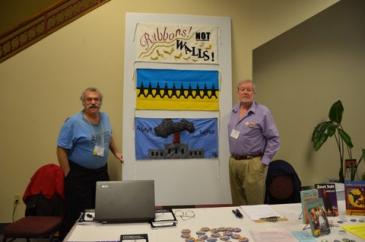
UU Humanism is alive and well in the Midwest!  Jack Reich and Roger Brewin have been crisscrossing Indiana, Illinois, Michigan and Wisconsin - by mid May they will have run ten information tables this spring at UU churches and District Annual Meetings (Heartland and Central Midwest).  The reaction to the combination of HUUmanist eye candy (buttons, magnets, books, etc) and social justice work (see article on "Ribbons Not Walls") has been encouraging.  Hundreds of people have made small purchases or donations, dozens have joined HUU or signed up to financially sponsor one of our projects.   Bill Murry's book "Becoming More Fully Human" sells steadily, and conversation is constant about the need for more humanist resources and presence in local congregations.

Additional tables have been (or will be) run at two Florida congregations, and at the Joseph Priestly District and Metro New York District Annual meetings, as well as the American Humanist Association conference by Mary Bellamy and John Hooper.  All told these efforts will have added nearly $3,000 to the HUU coffers.  Would you be willing to do a coffee hour table at your congregation?  Or something a little more ambitious at a District or regional function in the fall?   Get in touch with Roger Brewin at Rabrewin@aol.com  for details. Read more about Tables, Tables, Tables … »

Categories: 

Notes on the Religious Humanism Press

Becoming More Fully Human as eBook

Bill Murry’s book Becoming More Fully Human: Religious Humanism as a Way of Life, published in 2011, is building an ever wider following and is now available in digital form by arrangement with the Humanist Press (American Humanist Association).  The web site is www.humanistpress.com.

Upcoming Volumnes

Our next volume, Mike Werner’s Regaining Balance: The Evolution of the UUA, is currently in preparation for the press, and we expect to have copies for display at our exhibit booth at the coming General Assembly.  It’s the first in a projected series entitled “Voices of Diversity,” intended to call forth much-needed conversations about issues too often ignored, or possibly even thought by some to be too controversial for open discussion. 

Other books currently being prepared and under prominent consideration for this series include studies by Sarah Oelberg and Robert Tapp of neglected and therefore little-known yet significant episodes in Unitarian Universalist Humanist history.  From what we have seen of these works in progress we are confident that they and other similarly thought-provoking publications will generate great interest in months to come.  Read more about Notes on the Religious Humanism Press »

Categories: 

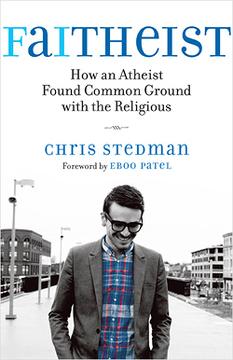
"Faitheist", by Chris Stedman -- Unitarian Universalism Is an Interfaith Case in Point

Chris Stedman's book "Faitheist" is subtitled "How an Atheist Found Common Ground with the Religious". For the purpose of this post, let's define religion as the belief in God or the supernatural; in other words, theism. (There is a lot of disagreement about defining religion in this way, particularly amongst "religious humanists", but since this is the way Stedman defines it in his book, let's stick with that.) The book is a personal narrative, a memoir by a twenty-something (strange as that may sound), about starting without religion, finding religion and then losing religion. Along the way Stedman finds a "calling" of sorts to encourage more service work among the non-religious and to bring atheists into the interfaith movement.

Unlike many who lose their religion, Stedman didn't replace belief with sneering disdain. While he went from religious to atheist, he never went the extra step to antireligious. Why?

"For the most part, the antireligious claims I encountered weren't considered critiques of theology, which I've often relished in both academic and interpersonal contexts; they were based in a willful ignorance of what it actually means to be religious and of the way religious lives are lived, and turned religious people into a cheaply mocked caricature."

He never became antireligious because he had relationships with people who were religious, including Eboo Patel, Stedman's boss when he worked at the Interfaith Youth Corps that Patel founded. Stedman never became antireligious because he knew people whose characters and actions didn't fit the caricature.

To most of his atheist colleagues, the idea of interfaith participation made no sense. "When the majority of prominent atheist-identified thought leaders name "the end of faith" as one of the movements top priorities, the idea of participating in organized interfaith efforts can seem contradictory." Not only was it contradictory, it was anathema and resulted in a great deal of vitriol directed at Stedman for even suggesting such a thing.

The idea doesn't seem contradictory to most Humanist Unitarian Universalists. To most of us, that "Common Ground" that Stedman talks about is literal: it is a white-steepled building, often called First Parish, with a weather vane on top instead of a cross or it is a modern meeting hall with stained glass windows depicting flowers, planets or a sunrise. Unitarian Universalists know from interfaith. Because we consider faith to be a personal matter, there is no dogma or creed that unites us, only adherence to seven principles that almost directly parallel the latest Humanist Manifesto. It's almost a cliché in UU circles to paraphrase John Wesley, “We need not think alike to love alike.” Another UU chestnut is the "You're a Theist, I'm a Humanist" song. It pokes fun at the fact that the Humanism-theism debate has been going on in congregations for a very long time but that we still end up friends in the end.

Everyone agrees that humans are social creatures and that (most of us) thrive in community. We are also more effective at taking action when we do it together. Being part of a Unitarian Universalist congregation is not for everyone, particularly not for those atheists who consider it "accommodationist" to work and socialize with people with whom they disagree regarding metaphysics. But how many of us are completely fixed in our thoughts about religion? Most anti-atheists accuse us of being arrogant, negative and selfish. This is certainly a caricature and a stereotype. As the LGBT movement taught us (something that Stedman also shows a great deal of experience with in his book), the best way dispel a stereotype is to have a relationship with the "other". By being openly atheist in UU communities where the overriding demands are service, compassion and thoughtfulness, we are showing people that their stereotypes are wrong. By standing up for reason within those communities, we are showing open-minded people that there is an alternative to supernaturalism that also leads to fulfillment and, for many people, that is their path to Humanism.

I guess it is not surprising that I see much of Unitarian Universalism in "Faitheist", after all Stedman got a master's degree from Meadville Lombard Theological School which is primarily a seminary for UU ministers, and the book was published by Beacon Press, the publishing arm of the Unitarian Universalist Association. In fact, I was surprised to see so little of UUism in the book. Why is that? Is Humanism within UUism such a lost cause that Stedman would prefer not to be associated with it? There are approximately 160,000 UUs in America, roughly half of whom identify as Humanists.  That's a big opportunity for organized Humanism! A CBS documentary "Religion & Spirituality in a Changing Society", recently profiled the UUA and the Harvard Humanists in Cambridge, MA where Stedman now works as two successful communities that are attractive to the "Nones", those without any affiliation with organized religion. That's a big opportunity for UUism!

Like Chris Stedman, I guess I'm a faitheist; I don't accept caricatures. I think engagement is better than estrangement. I won't politely ignore our differences if you are motivated by your belief in God -- I will ask you about your beliefs and share mine. Then we'll get down to work together. Read more about "Faitheist", by Chris Stedman -- Unitarian Universalism Is an Interfaith Case in Point »

Categories: 

Help Us Tell MA Gov. Deval Patrick & Melissa Rogers: Healing Must Be For Everyone

Please read, sign and share this petition, hosted at Groundswell:

Help Us Tell MA Gov. Deval Patrick & Melissa Rogers: Healing Must Be For Everyone

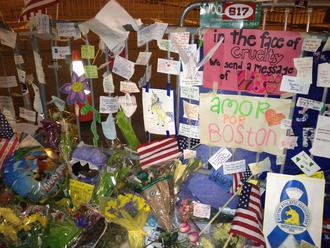
The Boston Marathon bombing was an event that effected all Americans, so there was no justification for excluding the representatives of the Harvard Humanists and the Secular Coalition for Massachusetts who asked to be included. Given that one fifth of the population is non-religious and that President Obama was there representing our secular government, there should have been a place made for the Humanist and atheist community.

I have signed the petition on behalf of the HUUmanists and encourage all of you to add your support. Read more about Help Us Tell MA Gov. Deval Patrick & Melissa Rogers: Healing Must Be For Everyone »

Categories: 

Congratulations, Stefan Jonasson

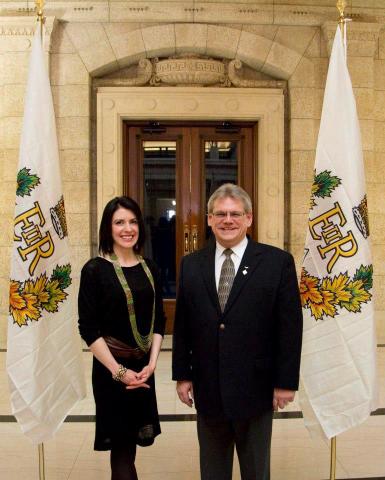
The HUUmanists Association is happy to congratulate one of our board members, Stefan Jonasson, for being awarded the Queen Elizabeth II Diamond Jubilee Medal by his home country of Canada.


Deanne Crothers, MLA for St. James, with Stefan Jonasson after the Queen Elizabeth II Diamond Jubilee Medal presentation ceremony

We enjoyed Stefan's Facebook announcement when he was told he was to receive the award:

I am humbled and honoured to be able to announce that I will be presented with the Queen Elizabeth II Diamond Jubilee Medal at a special ceremony in the Manitoba Legislative Building a week from today. [April 11, 2013] According to The Chancellery of Honours, "The Queen Elizabeth II Diamond Jubilee Medal is a tangible way for Canada to honour Her Majesty for her service to this country. At the same time, it serves to honour significant contributions and achievements by Canadians." Recipients must have made "a significant contribution to a particular province, territory, region or community within Canada, or an achievement abroad that brings credit to Canada." And then there's me.

Well done, Stefan, and we appreciate all the work you do for HUUmanists and for the UUA in your role as Director of Growth Strategies and Large Congregation Development. Read more about Congratulations, Stefan Jonasson »

Categories: 

Ribbons Not Walls

Ribbons Not Walls is the title of two related Social Justice projects that will be featured at the HUUmanists General Assembly booth in Louisville this coming June.  You are invited to participate in either or both. 

A "Banned Books by Hispanic Authors" library will be created with a community group in Louisville - this is a continuation of our Banned Book SmUUggling project from the Phoenix GA.  We are collecting multiple copies of 70 plus books that were removed from Tucson classrooms by the State of Arizona (see previous blog posts from Nov 18 and August 19 for full details).   Please consider purchasing one of the books, and sending it to us well in advance of June, so that we can ship all the titles together.  Of course, if you are planning on coming to Louisville, just bring the book - but let us know which title.   The complete list of banned books is available on Ribbonsnotwalls.org, along with the address to which to send your selection.   

The Ribbon project is a large fabric arts work, consisting of two dozen or more panels created by UU and humanist artists around the country.  It will be on display at our booth in the Exhibit Hall at GA (along with other subsequent venues) and will be paraded throughout the week at major GA events.  Panels depict ongoing immigrant rights work, along with themes from several of the Banned Books.  (See the Gallery below for examples.) Applications are still being accepted from individuals and groups willing to contribute a panel, and have their work seen by hundreds of delegates.   Full details are at Ribbonsnotwalls.org.

If your question isn't answered by the website, feel free to contact Roger Brewin at 773 881 4028 or 773 551 8540, or Rabrewin@aol.com. Read more about Ribbons Not Walls »

Categories: 

Pages

Subscribe to Front page feed