Posts by Roger Brewin

DARWIN DAY: A Zoom Conversation with Rev. Breeden & the UUHA

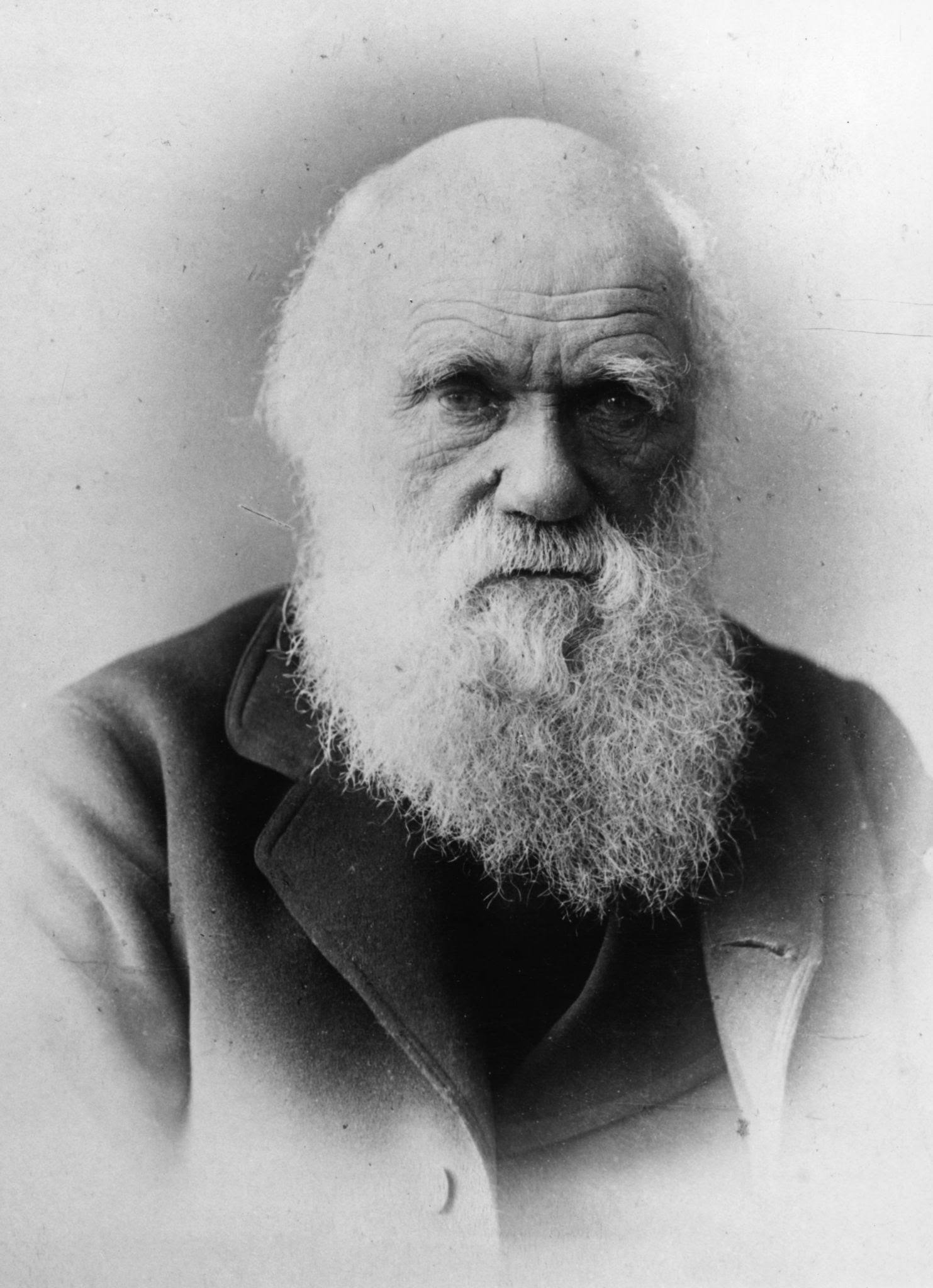
In honor of Darwin Day this past Monday, The UU Humanist Association is excited to offer a free Zoom presentation and celebrate the birthday, the work, and the legacy of Charles Darwin.

Darwin Day - "Religion, Science and the Great Story"

  • Date: Sunday, February 18
  • Time: 7:00pm Eastern (6:00pm Central | 5:00pm Mountain | 4:00pm Pacific)
  • Where: Zoom (Login instructions are listed below)

We will start with a 23-minute pre-recorded presentation, generously provided by Rev. David Breeden of First Unitarian Society of Minneapolis. (if you're running late, you can watch the presentation anytime right here.)

Following the presentation will be an open-ended discussion about Darwin and his significance to UU Humanism. The discussion will be led by UUHA Vice President James Witker, and all meeting attendees will be welcome to participate.

UUHA Members and non-members alike are invited to attend and participate in this lively, always-vital discussion about Darwin. Simply follow the Zoom login instructions below when Sunday's event is set to begin. Hope to see you there!

Zoom Login Information:

UU Humanist Association (UUHA) is inviting you to a scheduled Zoom meeting.

Join Zoom Meeting
https://us06web.zoom.us/j/88630140656

Meeting ID: 886 3014 0656

---

One tap mobile
+16465588656,,88630140656# US (New York)
+16469313860,,88630140656# US

---

Dial by your location
• +1 646 558 8656 US (New York)
• +1 646 931 3860 US
• +1 301 715 8592 US (Washington DC)
• +1 305 224 1968 US
• +1 309 205 3325 US
• +1 312 626 6799 US (Chicago)
• +1 719 359 4580 US
• +1 720 707 2699 US (Denver)
• +1 253 205 0468 US
• +1 253 215 8782 US (Tacoma)
• +1 346 248 7799 US (Houston)
• +1 360 209 5623 US
• +1 386 347 5053 US
• +1 507 473 4847 US
• +1 564 217 2000 US
• +1 669 444 9171 US
• +1 689 278 1000 US

Meeting ID: 886 3014 0656

Find your local number: https://us06web.zoom.us/u/kdPzkBh23v Read more about DARWIN DAY: A Zoom Conversation with Rev. Breeden & the UUHA »

Categories: 

RELIGIOUS HUMANISM JOURNAL: Call for Submissions - "Humanist Work and Communities, A Compendium"

For the upcoming issue of the Journal of Religious Humanism (Volume 50 #2), we are seeking submissions.
 
This issue's theme will be "Humanist Work and Communities, A Compendium"
 
The UUHA plans a volume of short articles about groups and individuals who perform significant humanist work, and/or offer community and services for non-theists. 
 
We seek suggestions of individuals and groups who write or publish books and periodicals, print or digital, produce online lectures, conversations, and webinars, hold in-person presentations and workshops, conduct weekly, monthly or quarterly gatherings, or otherwise offer humanist help and content to folks beyond their immediate members.
 
If you know of a humanist individual, discussion group, service provider, membership organization, congregation, or other entity that routinely reaches out, especially to isolated individuals and families, please respond to the Journal editor, Roger Brewin by return email or at 773-551-8540.  Please provide contact information (phone, email, website etc.) for the person or entity you are recommending for inclusion.  You do not have to provide detailed information, but please indicate if you would be willing to help write a short article (250-500 words). Sample texts will be sent.
 
We will be collecting suggestions for inclusion until February 15, and compiling completed articles through April 1.       
 
Thanks for considering this opportunity to provide access to the many different instances of organized humanism.
Categories: 

"How We Live Out Our Humanism, part II" Edition of Religious Humanism Journal Available to Members Today!

We are pleased to announce the publication of our latest edition of the UUHA's official publication, the Journal of Religious Humanism. Paid UUHA members should receive a digital copy of the journal via email today.

Our latest issue of the journal is "How We Live Out Our Humanism, Part II"

“I was in philosophy class … when the professor asked how many of us believed we could have a moral world without Christianity. I alone raised my hand,” writes Beth Lefever, “and then said that I didn’t believe Jesus would be a Christian were he here today. I was not very popular in my (conservative) northern Indiana university,” she adds, beginning a heart-felt account of her journey to UU Humanism and to parish ministry.
“The number one question for me, as a Secular Humanist, has been what should my role be in an organization that, while seeking to help the Mosou (one of the last remaining matriarchal societies, in a remote region of China) will inevitably change them, also.” -- John Lombard explains how the humanist value of choice allows him to grant agency without telling the Mosou what to do or how to do it.
“Being a Humanist minister in the south is a juggling game,” says Lynne Garner, who has pastored UU congregations in Georgia and Florida, while serving as an officer of local NAACP chapters. Using the examples of organizational requests to offer prayer, and invitations from colleagues to engage in theological debate, she shows how to keep all those balls in the air.

In the three articles described above, and five others, our contributors articulate their personal and/or group-oriented non-theism. This issue combines with Volume 49 #2 of the journal (released in May 2022) to offer a total of sixteen diverse and thoughtful responses to the question of “How We Live Out Our Humanism.”

Looking for more to read? Or maybe you can't become a member right now? Check out our journal archives, where we have nearly two decades' worth of essays and musings from some of the smartest voices in UU Humanism. (You need to log in to view.)

Please contact our editor, Roger Brewin, at rabrewin@aol.com, to:

  • Verify your membership status or report an issue in the delivery of your e-journal. (if you're not a member, become one this week!)
  • Offer commentary (critical, complimentary or curious) about this issue
  • Suggest topics for future issues
  • Submit specific material for consideration

In Community,

Roger Brewin, UUHA Journal of Religious Humanism Editor Read more about "How We Live Out Our Humanism, part II" Edition of Religious Humanism Journal Available to Members Today! »

Categories: 

“How We Live Out Our Humanism, Part II” Vol 50 #1 of the journal Religious Humanism, will be available to UUHA members, mid-December, 2022.

“How We Live Out Our Humanism, Part II” Vol 50 #1 of the journal Religious Humanism, will be available to UUHA members, mid-December, 2022.

“I was in philosophy class … when the professor asked how many of us believed we could have a moral world without Christianity. I alone raised my hand,” writes Beth Lefever, “and then said that I didn’t believe Jesus would be a Christian were he here today. I was not very popular in my (conservative) northern Indiana university,” she adds, beginning a heart-felt account of her journey to UU Humanism and to parish ministry.

“The number one question for me, as a Secular Humanist, has been what should my role be in an organization that, while seeking to help the Mosou (one of the last remaining matriarchal societies, in a remote region of China) will inevitably change them, also.” John Lombard explains how the humanist value of choice allows him to grant agency without telling the Mosou what to do or how to do it.

“Being a Humanist minister in the south is a juggling game,” says Lynne Garner, who has pastored UU congregations in Georgia and Florida, while serving as an officer of local NAACP chapters. Using the examples of organizational requests to offer prayer, and invitations from colleagues to engage in theological debate, she shows how to keep all those balls in the air.

In the three articles described above, and five others, our contributors articulate their personal and/or group-oriented non-theism. This issue combines with Volume 49 #2 of the journal (released in May 2022) to offer a total of sixteen diverse and thoughtful responses to the question of

“How We Live Out Our Humanism.” Volume 50 #1 is currently in production, and will be released digitally to UUHA members in Mid-December. Read more about “How We Live Out Our Humanism, Part II” Vol 50 #1 of the journal Religious Humanism, will be available to UUHA members, mid-December, 2022. »

Categories: 

Arguing Abortion in a Post-Roe America

This op-ed was written by The Rev. Dr. Lucas Hergert, minister of the North Shore Unitarian Church in Deerfield, Illinois. He will teach Ethics at Meadville Lombard Theological School during the coming academic year.  
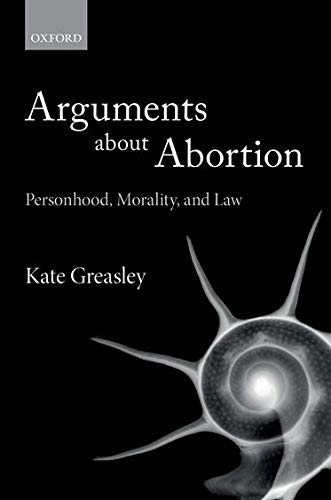
SOURCE: Oxford University PressHow do Unitarian Universalists and other religious and secular progressives frame a response to the demise of Roe v. Wade? Kate Greasley’s book Arguments about Abortion: Personhood, Morality, and Law (2017) offers a thorough defense of the pro-choice position. Written before the Supreme Court scuttled Roe, Greasley’s justification for abortion rights is newly useful. The work proffers important tools both to thoughtful readers interested in secular moral reasoning as well as pro- choice activists who wish to make their case.

Unlike some philosophical accounts that duck the question of moral personhood, Greasley tackles it directly. She urges a notion of personhood development that she calls gradualism. Here personhood emerges tentatively rather than instantaneously. As she puts it, there is no “existential pop” when the fetus suddenly becomes a person worthy of moral consideration. Her argument rebuts pro-life philosophers who depend on conception as just such a moment.

Greasley defends personhood as the gradual clustering of relevant qualities. These include sensitivity to pain, more advanced human physiology, self-directed movement, independent breathing, and cortical brain activity. Each is foundational for capacities associated with flourishing in older persons—capacities such as reason, communication, self-direction, relationship, and desire. What is key is that these markers develop over time and are not present at conception. Instead, their eventual emergence and interweaving define the entry of a human being into the moral community.

Some may argue that this is an untidy view of what makes a person. However, its messiness does not make it unrealistic. As Greasley points out, many of the staples of human life cluster complex qualities. Friendship, for instance, holds together loyalty, dedication, mutual regard, kindness, and trustworthiness. This makes friendship a complicated notion, as no one trait defines it. Likewise, the interweaving of personhood qualities may be less clear-cut than a single indicator. This complexity, however, does not render it useless or make it fundamentally incorrect.

Greasley must answer an array of rebuttals. Why choose these markers and not others? What do ethics require for fetal lives that never develop such personhood qualities? Where should one draw the line around when an abortion can be performed? She leaves no stone unturned. What is more, her arguments are rich, thorough, and colorful. She often relies on analogy and thought experiment, making her work relatively accessible to the lay reader. Dispensing with the notion that philosophy must be dry, zombies, talking dogs, intelligent extraterrestrials, and hypnotized attackers all make appearances. Such thought experiments—though whimsical—interrogate assumptions and make for an enjoyable read.

SOURCE: UUAHer notion of personhood accords with the intuitions possessed by many thoughtful progressives. Many are baffled by the claim that a newly conceived embryo enjoys the same moral status as an adult. The human zygote lacks not only reason but also a brain that will eventually enable reason. It is little more than a cluster of cells. By developing the implication of this reality, Greasley gives reasonable ground for the pro-choice position. Only as the fetus acquires the likeness, traits, and capacities of older humans does it become worthy of moral respect.

For Unitarian Universalists, the gradualist view is clarifying. Our Association affirms the “Inherent worth and dignity of every person.” At the same time, a Pew study shows that fully 90% of Unitarian Universalists support abortion rights. What does it mean to say that dignity is “inherent” to the person while not extending that to human life at its inception? Articulating a gradualist understanding of personhood is one possible answer. On these terms, worth and dignity are inherent to personhood defined as the interweaving of relevant developmental factors. They are not inherent to a zygote by dint of having been conceived.

There are important areas neglected by Greasley’s work. Many thoughtful readers will find moral philosophy that overlooks lived experience strangely deficient. This is especially true in the case of abortion arguments. Here stories often change minds as much as rational argument. Framing narratives can add much, including highlighting the disproportionate effect of anti-abortion policies on poor persons and persons of color. Greasley’s abstractions at times seem blinkered to sociological and experiential realities.

This reservation aside, I recommend Greasley’s book. Especially to activists and readers who wish to argue abortion not only on theological but also secular grounds, it offers one important tool. Both demanding and worthwhile, Arguments about Abortion can help pro-choice Unitarian Universalists and others frame a response in a post-Roe America.   Read more about Arguing Abortion in a Post-Roe America »

Categories: 

"How We Live Out Our Humanism" Edition of Religious Humanism Journal Available to Members Today!

We are pleased to announce the publication of our latest edition of the UUHA's official publication, the Journal of Religious Humanism. Paid UUHA members should receive a digital copy of the journal via email today.
Our latest issue of the journal is "How We Live Out Our Humanism"

In this issue we prompt our superb contributors to “tell us about your Humanist group’s community service, or an unusual family tradition, or an occasional gathering of friends to pursue a common passion, or an individual quest that reflects the best of humanism as you know it.” The results are an eclectic mix of impassioned reports on the work of Humanist communities and social justice organizations, along with deeply personal reflections on family, service to others and the human condition.


Looking for more to read? Or maybe you can't become a member right now? Check out our journal archives, where we have nearly two decades' worth of essays and musings from some of the smartest voices in UU Humanism. (You need to log in to view.)

Please contact our editor, Roger Brewin, at rabrewin@aol.com, to:

  • Verify your membership status or report an issue in the delivery of your e-journal. (if you're not a member, become one this week!)
  • Offer commentary (critical, complementary or curious) about this issue
  • Suggest topics for future issues
  • Submit specific material for consideration

In Community,

Roger Brewin, UUHA Journal of Religious Humanism Editor Read more about "How We Live Out Our Humanism" Edition of Religious Humanism Journal Available to Members Today! »

Categories: 

Religious Humanism Journal: Call for Submissions

We hope all UUHA members enjoyed our most recent edition of the Journal of Religious Humanism. The time has already come for our journal editors to plan for our first issue of the new year. If you have ever been interested in submitting an article for our journal, we have your next opportunity:

Theme for Vol. 49, Issue 2:

How We Live Out Our Humanism

We are looking for stories of how your life is impacted by your humanist values - something that you “do” that expresses your humanist identity. Examples might include personal commitments, relationship building, or communal endeavors.

Tell us about your Humanist group’s community service, or an unusual family tradition; an occasional gathering of friends to pursue a common passion, or a solitary quest that reflects the best of humanism as you understand it.

This could be a first-person account, or a tale about the actions of others. Just be sure, if you are telling someone else’s story, that you have permission to be their narrator, or if not, rely on information already in the public domain.

Essays from 500 to 1,000 words, submitted to the editor at rabrewin@aol.com, by October 15, 2021, will be considered for inclusion for Volume 49 #2, to be published digitally by year’s end. All submissions selected are subject to editing for word count, spelling and grammar, and suitability for the issue’s theme. Author’s permission will be sought for any major changes we recommend.

Previous contributors to the Journal are always welcome, though we’re (just a little) partial to folks who haven’t contributed to the past two issues (“Humanist Elevator Speeches,” and “A Humanist Calendar.”)

We look forward to putting your positive story on the screens of the hundreds of humanist and humanist-friendly UUs, and others, who make up our readership.

Have an idea, and want to know if it might “fit” with what we’re seeking, before you commit to writing? Need a couple of examples of what we’re looking for? Contact the Editor, Roger Brewin, at 773-551-8540 or rabrewin@aol.com. Read more about Religious Humanism Journal: Call for Submissions »

Categories: 

"Doubt & Mystery: A Humanist Calendar" Edition of Religious Humanism Journal Available to Members Today!

We are pleased to announce the publication of our latest edition of the UUHA's official publication, the Journal of Religious Humanism. Paid UUHA members should receive a digital copy of the journal via email today.

Our latest issue of the journal is "Doubt and Mystery: A Humanist Calendar."

This issue explores one means of ritualizing those very human emotions—a calendar of humanist holidays—regular opportunities for exploring that difficult but worthwhile goal, linking our appreciation of the mysteries of life and of the Cosmos, with our natural skepticism.


Looking for more to read? Or maybe you can't become a member right now? Check out our journal archives, where we have nearly two decades' worth of essays and musings from some of the smartest voices in UU Humanism. (You need to log in to view.)

Please contact our editor, Roger Brewin, at rabrewin@aol.com, to:

  • Verify your membership status or report an issue in the delivery of your e-journal. (if you're not a member, become one this week!)
  • Offer commentary (critical, complementary or curious) about this issue
  • Suggest topics for future issues
  • Submit specific material for consideration

In Community,

Roger Brewin, UUHA Journal of Religious Humanism Editor Read more about "Doubt & Mystery: A Humanist Calendar" Edition of Religious Humanism Journal Available to Members Today! »

Categories: 

Religious Humanism Journal: Call for Submissions - "Doubt and Mystery"

We hope all UUHA members enjoyed our most recent edition of the Journal of Religious Humanism. The time has already come for our journal editors to plan for our first issue of the new year. If you have ever been interested in submitting an article for our journal, we have your next opportunity:

Theme for Vol. 49, Issue 1:

Doubt and Mystery: UU Humanist Ritual and Celebration

Built around a common calendar of observances, values and practices, this issue will explore such questions as: What does the new age of Secularism and Humanism offer to UU individuals and communities? What does UU religious diversity and polity offer to Humanism? Can an atheist UUism grow and thrive, and how might that happen? What and how should Humanists celebrate?

We seek short articles (200 to 500 words) on the questions above, and on the following subjects, based on programming you have attended, or helped to create or lead, or about which you have spoken or written.

Major Holidays centering traditional Humanist values (science, nature, first Amendment freedoms, etc) such as Darwin Day 2/12; Earth Day 4/22; Banned Books Week 9/19-25; Equinoxes and Solstices.

Occasions reflecting contemporary Humanism (Community and Family Life; Congregational Humanism; Social Justice, interfaith cooperation, etc.) such as New Year’s Day (burning bowl) 1/1; Black History Month (emphasis on Black Freethinkers) February; Dr. Seuss’s Birthday 3/2; Pi Day (lifting up mathematics) 3/14; Women’s History Month March; Ask an Atheist Day, third Thursday in April & September; National Day of Reason 5/1; Stonewall Anniversary 6/28; International Blasphemy Day 9/30; Indigenous People’s Day 10/14; Interfaith Thanksgiving 11/22; Transgender day of Remembrance 11/20; Humanlight 12/23; New Year’s Eve 12/31.

Best practices for recurring programs such as forums, debates, public speakers and panels, science cafes, Humanist themed services, etc.

Related topics to those listed above - please submit an informal proposal before 12/31/20.

Requirements:

  • We prefer your words and experiences; please include references when using someone else’s ideas.
  • 500-word limit will be enforced; longer entries will, regrettably, be edited down.
  • Submit your drafts no later than January 31 2021, to the editor, Roger Brewin, at rabrewin@aol.com.
  • Full disclosure: the editors are human – so shorter, earlier submissions are more likely to be included.
  • Questions (rabrewin@aol.com OR 773-551-8540) sent by December 31, will be answered by January 2.
  • Please include a brief (35 word maximum) bio; including Humanist and/or UU affiliations.


Thanks for being part of this exciting process with the UU Humanist Association and the Hournal of Religious Humanism. Read more about Religious Humanism Journal: Call for Submissions - "Doubt and Mystery" »

Categories: 

"Elevator Speeches" Edition of Religious Humanism Journal Available to Members Today!

We are pleased to announce the publication of our latest edition of the UUHA's official publication, the Journal of Religious Humanism. Paid UUHA members should receive a digital copy of the journal via email today.

Our latest issue of the journal is "Humanist Elevator Speeches." 

It’s a simple idea – you get on an elevator on the ground floor. An acquaintance asks: “You’re a Humanist, right? Tell me about that.” It’s your “good news of Humanism” moment. Do you know what you would say? That’s what this issue is all about. Your Humanist Elevator Speech. Your response to that question ... your clear, positive, short response.


As our Executive Committee told you in their recent letter - this is the first issue to go to every member in digital format.  We hope you will embrace this approach, which allows us to continue to bring you Humanist opinion and scholarship, and other Journal content, without the ever increasing burdens and costs (environmental, administrative and financial, of maintaining a mostly print-and-paper product.

For those of you who paid for a full fare membership ($60 for one year, $108, $250 or $600 for multiple years or life) which previously included a print version, there will be a limited number of physical copies that are part of our obligation to supply library subscribers and incarcerated Humanists.  We will make those available to those who request them, as long as the supply lasts.

Looking for more to read? Or maybe you can't become a member right now? Check out our journal archives, where we have nearly two decades' worth of essays and musings from some of the smartest voices in UU Humanism. (You need to log in to view.)  

Please contact our editor, Roger Brewin, at rabrewin@aol.com, to:

  • Verify your membership status or report an issue in the delivery of your e-journal. (if you're not a member, become one this week!)
  • Inquire about a print copy (you can also inquire online here)
  • Offer commentary (critical, complementary or curious) about this issue
  • Suggest topics for future issues
  • Submit specific material for consideration

In Community,

Roger Brewin, UUHA Journal of Religious Humanism Editor Read more about "Elevator Speeches" Edition of Religious Humanism Journal Available to Members Today! »

Categories: 

Pages